
Software cost estimates are required throughout the software development lifecycle, often before detailed requirements, architecture, and implementation decisions have been established. Yet traditional software cost estimation approaches frequently depend on detailed measures of software size, such as source lines of code (SLOC), that may not be available early in a program.
This creates a fundamental challenge: estimates are needed when the software is least understood. Programs must make acquisition and budget decisions while requirements and implementation approaches continue to evolve. Estimation can therefore require substantial SME involvement and expert judgment, particularly early in the lifecycle.
The Software Engineering Institute (SEI) developed the Capability-Based Software Sizing (CaBSS) methodology to address this challenge. CaBSS provides an evidence-based approach to estimating software costs from information available early in the lifecycle.
What Is CaBSS?
CaBSS challenges a foundational assumption of traditional software estimation: that software must be accurately sized before its cost can be estimated.
Instead, CaBSS starts with what the software needs to do. High-level system capabilities are decomposed into the software functions needed to satisfy them. Historical cost data for similar functions then provide the basis for the estimate.
To estimate with CaBSS, start with what the software needs to do—not how much you need to build.
Data Scientist

The following figure illustrates and example of how to break down mission capabilities into high-level software functions and/or capabilities.
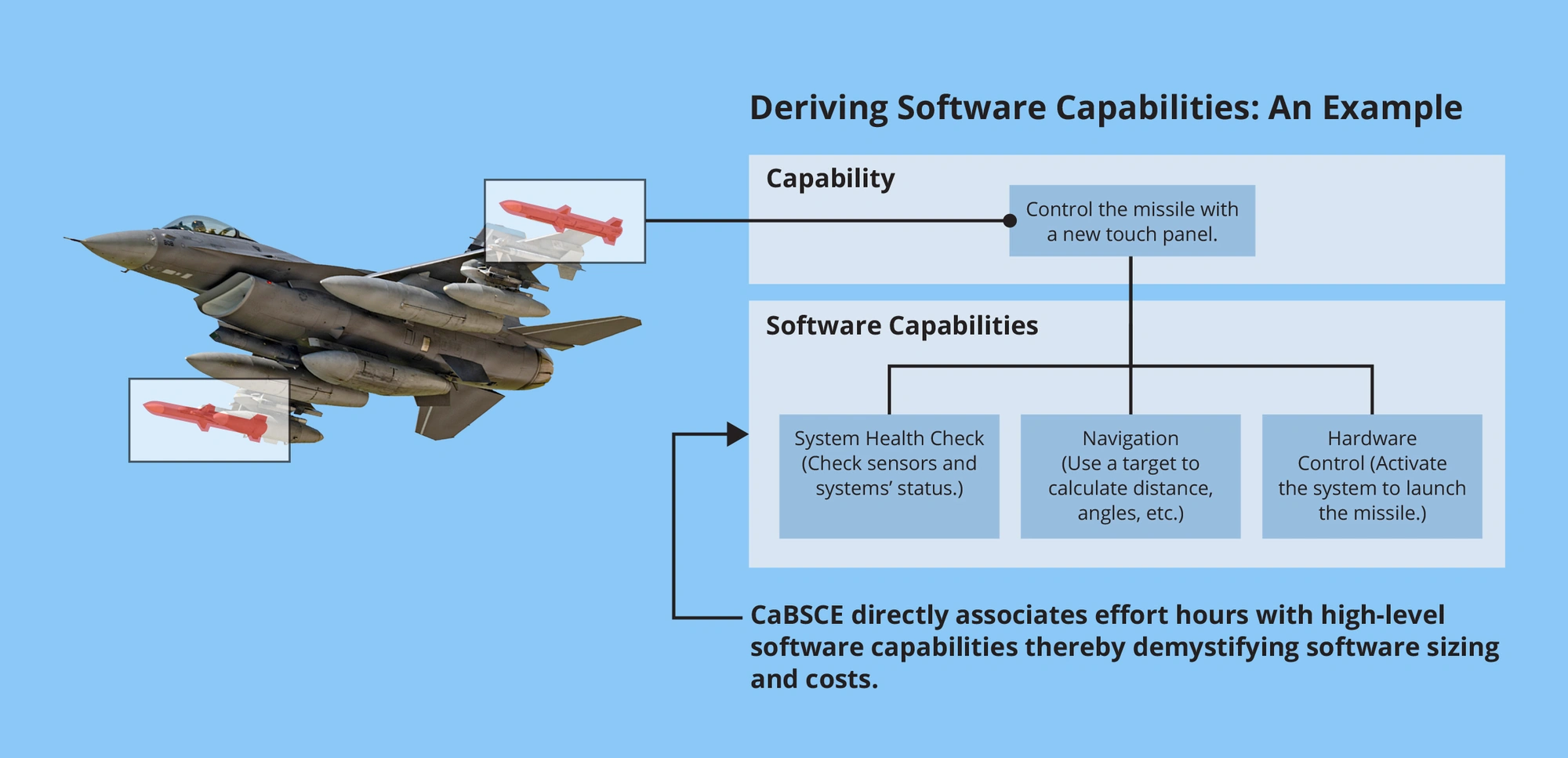
Figure 1: Sample Breakdown of Mission Capabilities into Software Functions
CaBSS’s approach allows analysts to estimate software before the detailed software size is known and refine estimates as requirements, architecture, reuse, and implementation decisions evolve.
What Have We Demonstrated?
The SEI evaluated CaBSS by conducting two pilot studies. These pilots demonstrated that CaBSS
- can be learned and applied quickly
- enables the rapid development of software cost estimates
- reduces reliance on subject-matter experts
- produces estimates that closely align with actual costs
These results demonstrate the potential for CaBSS to provide a faster, more flexible, and more evidence-based alternative to traditional software cost estimation approaches.
Why It Matters for Modern Software Development
Agile and DevSecOps have made software development more flexible, allowing requirements and implementation approaches to evolve throughout development. More recently, AI-assisted development is changing how software is designed, generated, tested, and maintained.
These changes make implementation-specific measures such as SLOC increasingly difficult to use as the foundation for early cost estimates.
The need to estimate software cost has not changed. CaBSS provides an approach based on what the software must do rather than how it is ultimately implemented—providing a foundation for estimation that can adapt as software development practices evolve.
In Context
This FY2024-26 project
- is a collaborative effort utilizing researchers from the SEI, U.S. Air Force, U.S. Missile Defense Agency, Office of the Secretary of War Cost Assessment & Program Evaluation, Software Metrics Inc., and Niwot Ridge Consulting building on previous knowledge from SEI projects related to software cost estimation, cost uncertainty, causal cost modeling, and data-driven estimation.
- leverages the SEI’s expertise and experience in software cost estimation and measurement.
Principal Investigator
Dr. Anandi Hira
Software Cost Estimation Researcher
SEI COLLABORATORS
Dr. Bill Nichols
Initiative Lead, Applied Measurement and Experimentation
Eileen Wrubel
Technical Director, Smart Software Acquisition
Dr. Christopher L. Miller
Senior Engineer
Shannon Gallagher
SEI Alum
Jeffrey Mellon
SEI Alum
Nick Testa
SEI Alum
Rob Garrett
SEI Alum
Michael Daniels
Software Measurement & Estimation Data Scientist
Julie Cohen
Senior Member of the Technical Staff
Bill Novak
SEI Alum
Stephen Wilson
Test Engineer
Brigid O’Hearn
DoD Software Modernization Policy Lead
Alfred R. Schenker
Senior Member of the Technical Staff
Tom Merendino
SEI Alum
EXTERNAL COLLABORATORS
Shawn Valentine
Operations Research Analyst, AFLCMC/FZCE
Lt. Grant Halliday
Deputy Cost Chief, AFLCMC/WAU F-22
Aaron Bingham
Cost & Integration Chief, AFLCMC/WAU F-22
Capt. Stephen Chatterton
Cost Analyst, AFLCMC/WAU F-22
Byron McCullough
Cost Analyst, AFLCMC/WAU F-22
Jenna Meyers
Senior Operations Research Analyst, OSW CAPE
Dan Strickland
Cost Estimation Software SME, MDA
Matt Stahr
Technical Advisor (Weapons, Special Programs & Analytic Integration), AFCAA
Brad Clark
Vice President, Software Metrics Inc.
Glen Alleman
Project Manager, Public Speaker, and Director, Niwot Ridge Consulting
HAVE A QUESTION?
Reach out to us at info@sei.cmu.edu