
In disaster response operations, timely and effective decision-making is critical to saving lives and minimizing damage. As the use of autonomous aerial systems becomes more widespread, the burden on human operators to manage and coordinate these systems has grown significantly. A single disaster response coordinator may be tasked with managing a fleet of drones across complex, dynamic environments—ranging from earthquakes to wildfires—where maintaining situational awareness in the face of unpredictable and rapidly evolving events presents a significant challenge. However, current approaches to managing drone fleets often rely heavily on manual control or simplistic automation, limiting scalability and responsiveness. There is a need for intelligent tools that can assist human operators by generating coherent, adaptive courses of action (COAs) that account for the context, constraints, and priorities of the mission.
This project aims to address the need for intelligent decision-support tools in disaster response operations by developing and evaluating COA planners designed to assist coordinators in managing larger drone fleets. These planners will be able to interpret and process semi-structured natural language inputs that describe the mission context, including the type of disaster, available assets, environmental constraints, and task priorities, and generate actionable plans that balance competing demands in real-time. By leveraging both simulation and real-world testing, this study aims to rigorously evaluate the performance and practicality of three categories of planners: rule-based, learning-based, and symbolic.
This project aims to address the need for intelligent decision-support tools in disaster response operations by developing and evaluating COA planners designed to assist coordinators in managing larger drone fleets.
Eric Haywiser
Senior Machine Learning Engineer

The fundamental research impact of this project lies in advancing the capabilities of automated planners through several key innovations. First, the project will enhance context awareness by enabling planners to leverage text-based data, facilitating more informed and nuanced decision-making processes. Additionally, it will explore and assess the feasibility of integrating multi-modal inputs, including sensor and mission data, into planning techniques, leading to improved performance in complex scenarios. Furthermore, incorporating textual data into these systems will significantly boost planner adaptability, enabling dynamic and responsive adjustments to evolving conditions.
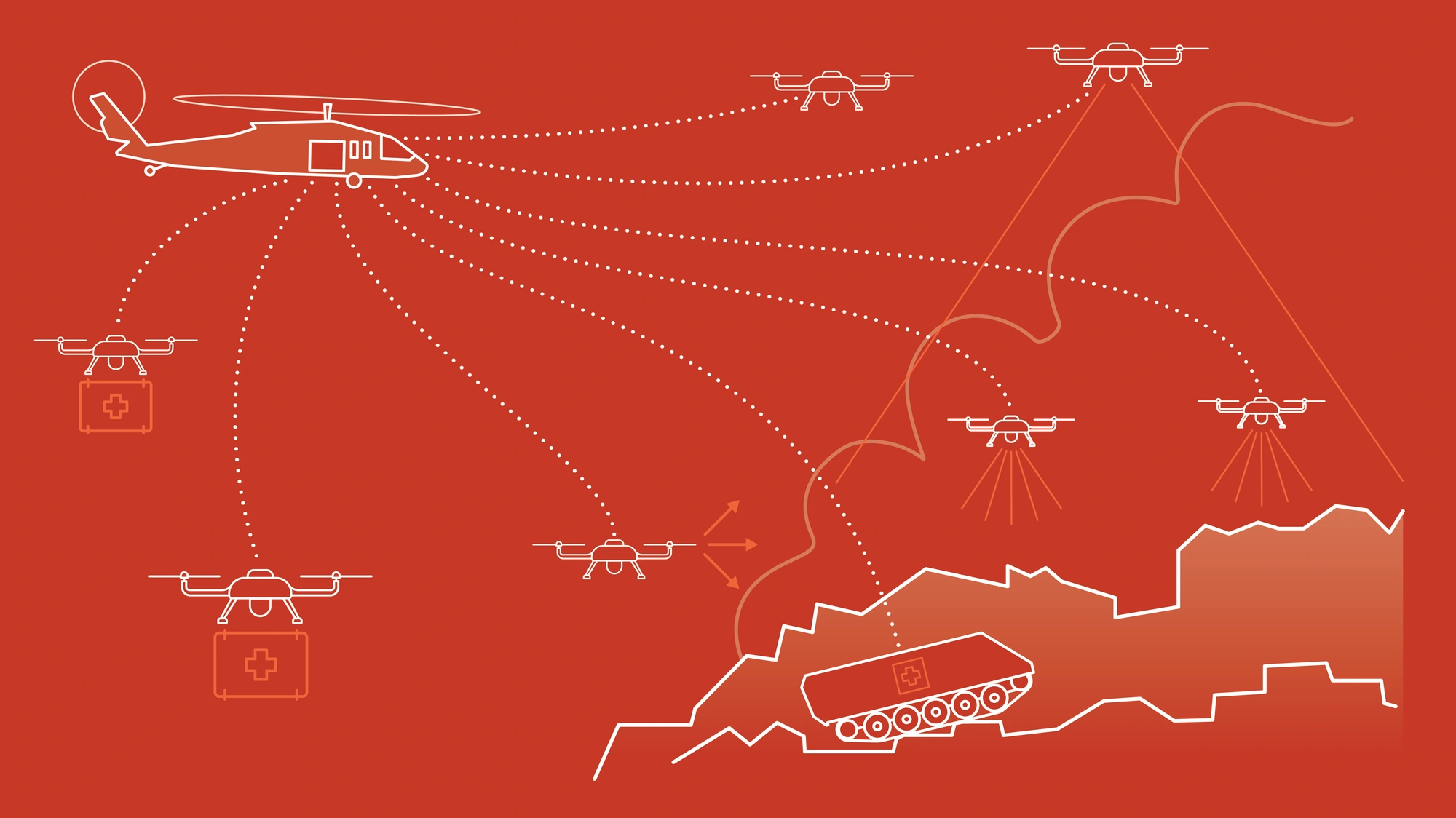
Figure 1: Mission Commander Controlling a Fleet of Drones for Disaster Response
In Context
This FY2026-27 project
- is a collaborative effort utilizing researchers from the SEI, Carnegie Mellon University, and DARPA building on previous knowledge from SEI projects related to mission planning
- leverages the SEI’s expertise and experience in AI Engineering and Autonomous systems to understand the trade space defined by different mission planning techniques
- aligns with the CMU SEI technical objective to bring capabilities that make new missions possible or improve the likelihood of success of existing ones
- aligns with the SEI technical objective to modernize software engineering and acquisition (codify AI engineering practices; improve designed-in trustworthiness), and meets the SEI’s primary enduring goals of delivering trustworthiness, capability, and timeliness
- aligns with the OUSD(R&E) critical technology priorities, of leveraging advanced computing and software, building trusted AI and autonomy, developing integrated sensing and cyber technology to counter advanced threats, and creating defense microelectronic solutions
Principal Investigator
Eric Haywiser
Senior Machine Learning Engineer
SEI Collaborators
Stephen Brewer
Machine Learning Engineer
Daniel Justice
Adjunct Instructor
Abhik Mullick
Assistant Machine Learning Engineer
John Stogoski
Technical Manager
CMU COLLABORATORS
Sebastian Scherer
Research Professor, Robotics Institute
Krrish Jain
Student, Robotics Institute
Muyang Yan
Student, Robotics Institute
HAVE A QUESTION?
Reach out to us at info@sei.cmu.edu