All Projects
Filter by

The Cybersecurity Maturity Model Certification: Protecting the Warfighter by Securing the DIB Supply Chain
Created June 30, 2025
Malicious cyber activity, including the theft of intellectual property, poses an increasing and serious threat to national and economic security. To help protect the warfighter, the Department of Defense called on our experts in the CERT Division to help create the Cybersecurity Maturity Model Certification (CMMC) program. Designed to combat the loss of unclassified but controlled data in the Defense Industrial Base (DIB) sector, CMMC helps prevent sensitive information throughout the trusted supply chain, the more than 220,000 organizations globally that provide essential products and services to our nations’ military services.
LEARN MORE
Ensuring Machine Learning Models Meet System and Mission Requirements
Created April 18, 2025
The SEI’s Machine Learning Test and Evaluation is a one-of-a-kind framework to evaluate machine learning models from inception to deployment.
LEARN MORE
Automating Mismatch Detection in ML Systems
Created Oct. 1, 2022 • Updated April 11, 2025
Timely deployment of Machine Learning (ML) systems is vital for critical national security missions. The SEI’s TEC tool reduces problems that cause delay in the fielding of ML systems.
LEARN MORE
AISIRT Advances National Security with Secure AI
Created Nov. 10, 2023 • Updated March 26, 2025
The SEI created an AISIRT to ensure that the Department of Defense and other federal agencies develop, adopt, and use AI effectively and securely to safeguard the security of the nation.
LEARN MORE
SEI Solutions That Improve the DoD's Cyber Mission Readiness
Created March 21, 2025
The SEI develops tools that virtualize systems to deliver high-quality training and user performance validation to ensure cyber teams are ready to face ever-evolving threats and challenges.
LEARN MORE
Improving Disaster Response with the xView2 Challenge
Created July 22, 2020 • Updated March 17, 2025
The DoD’s Defense Innovation Unit, the SEI, and other organizations launched the xView2 Challenge to create accurate, efficient machine learning models that can advance disaster response. The competition resulted in xView2, a machine learning system that analyzes satellite imagery to classify damage to structures.
LEARN MORE
Automating Container Minimization for the Edge
Created Nov. 27, 2024 • Updated March 12, 2025
The SEI's Container Minimization Tool prunes and deduplicates files to reduce storage waste and software vulnerabilities in the resource-limited environment of the tactical edge.
LEARN MORE
Delivering “Virtual,” Real-World Experiences to Build Elite Cyber Teams
Created May 28, 2019 • Updated Feb. 28, 2025
The SEI CERT Division develops simulations that offer cyber operators a way to get the experience they need to perform at elite levels.
LEARN MORE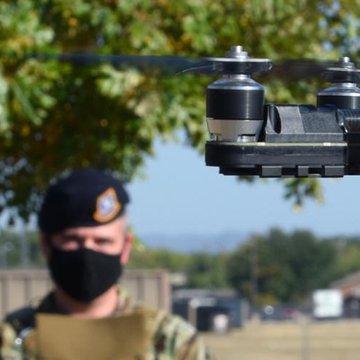
AI Trust Lab: Trustworthy AI for a Safer Nation
Created Oct. 31, 2019 • Updated Feb. 27, 2025
To support DoD mission success, the SEI’s Trust Lab advances the streamlined development of trustworthy and human-centered AI engineering practices by focusing on mission goals and prioritizing warfighter needs.
LEARN MORE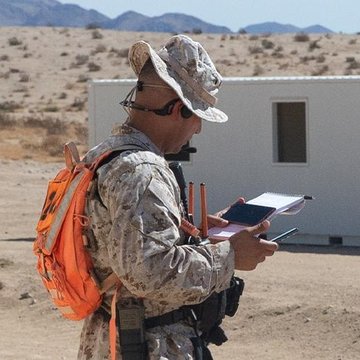
Internet of Things (IoT) Security Platform Can Improve Warfighter Resilience, Deliver Cost Savings
Created Oct. 1, 2019 • Updated Feb. 27, 2025
Internet of Things (IoT) devices can provide useful capabilities, but many have known security vulnerabilities that have been exploited by malicious actors. The SEI KalKi security platform leverages software-defined networking (SDN) and network function virtualization (NFV) to enable secure integration of IoT devices into Department of Defense DOD) networks, even devices that are not fully trusted or configurable. Such integration can improve warfighter resilience and deliver cost savings.
LEARN MORE