Temporal Memory Safety in C and C++: An AI-Enhanced Pointer Ownership Model
• Podcast
Publisher
Software Engineering Institute
Listen
Watch
Abstract
In October 2025, CyberPress reported a critical security vulnerability in the Redis Server, an open-source in-memory database that allowed authenticated attackers to achieve remote code execution through a use-after-free flaw in the Lua scripting engine. In 2024, another prominent temporal memory safety flaw was found in the Netfilter subsystem in the Linux kernel: CVE-2024-1086. Bugs related to temporal memory safety, such as use-after-free and double-free vulnerabilities, are challenging issues in C and C++ code.
In this podcast from the Carnegie Mellon University Software Engineering Institute (SEI), Lori Flynn, a senior software security researcher in the SEI’s CERT Division, and David Svoboda, a senior software engineer, also in CERT, sit down with Tim Chick, technical manager of CERT’s Applied Systems Group, to discuss recent updates to the Pointer Ownership Model for C, a modeling framework designed to improve the ability of developers to statically analyze C programs for errors involving temporal memory.
About the Speaker
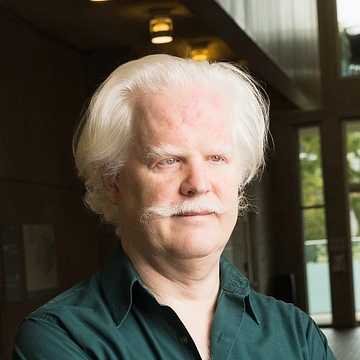
David Svoboda
David Svoboda is a software security engineer at the CERT Division of the Software Engineering Institute. He co-authored or contributed to four books, including The SEI CERT C Coding Standard and The CERT Oracle Secure Coding Standard for Java. He also maintains the SEI CERT Coding Standards wiki and …
Read more
Lori Flynn
Dr. Lori Flynn is a senior software security researcher in the CERT Division at Carnegie Mellon University's Software Engineering Institute. Flynn's research focuses on automated software security analyses using static analysis. Sometimes her work extends to cybersecurity, AI/ML, automated program repair, malware analysis, SBOM/SCA tools, DevSecOps, and mobile computing. She …
Read moreSubscribe
Supplemental Materials
Part of a Collection
Pointer Ownership Model: Temporal Memory Safety Framework for C