Social Media Analysis Elucidates Army’s Battle Damage Assessment
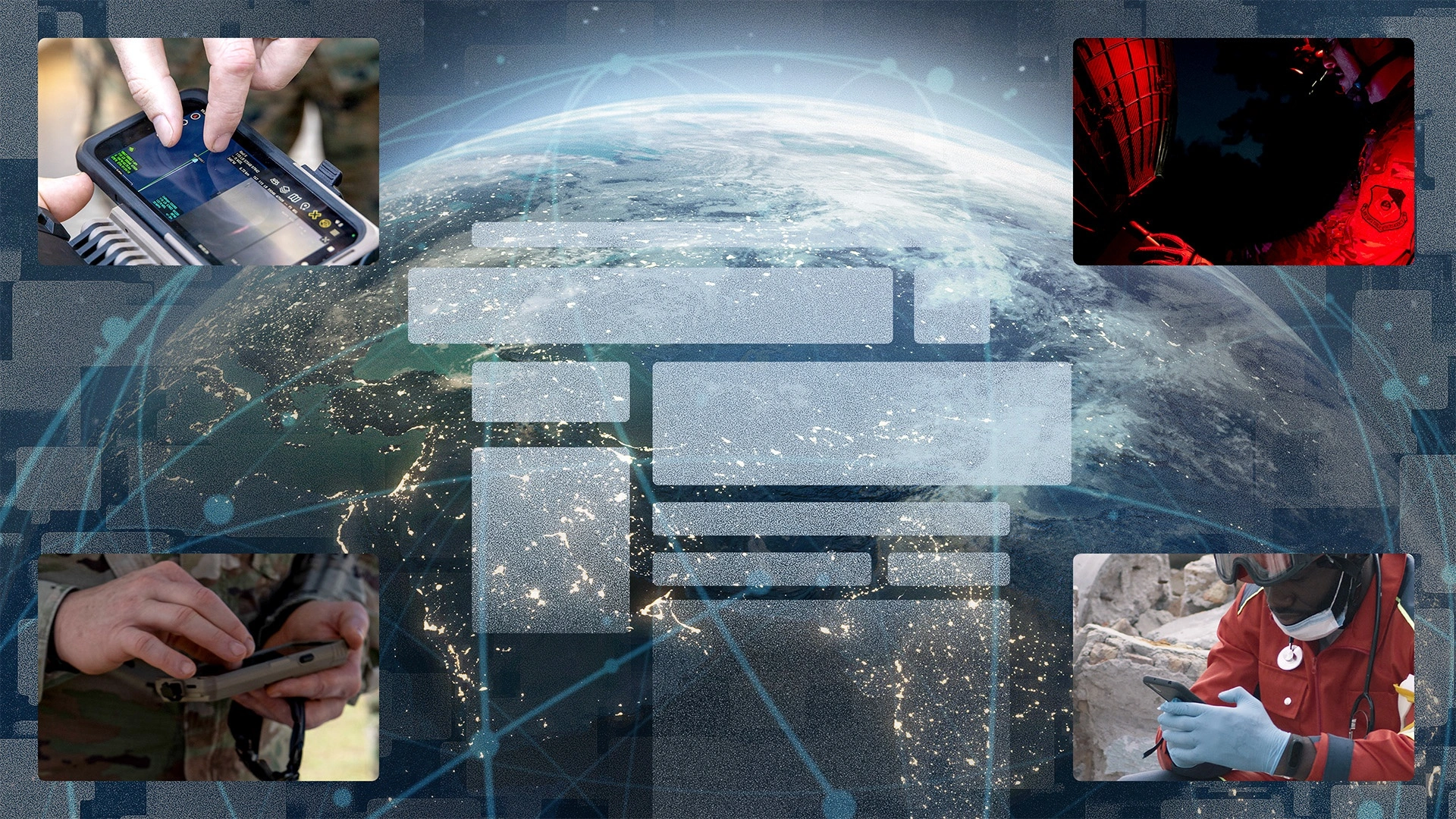
To protect warfighters and determine mission success, combat commanders rely on timely and accurate assessments of damage to enemy targets. Social media posts provide open source data for battle damage assessment, but the number of posts can sometimes be too great for human review. To prioritize posts for analysis, the SEI collaborated with the Army Artificial Intelligence Center (AI2C) to develop the Elucidate algorithmic social media recommender system for battle damage assessment.
Filtering the Fire Hose
AI2C had previously developed tools for scraping combat-related information from social media content, such as geotagged posts and images. With no way to prioritize the output, the tools yielded far more results than human analysts could review in a timely manner, potentially leaving valuable intelligence unseen. During a year of use, the tool gathered about 1 million posts from an active war zone. Analysts could review only 20,000.
In late 2024, the SEI started working with AI2C on techniques to improve this battle damage assessment capability, known as Elucidate. By March 2025, the SEI delivered algorithms that integrated into existing tools and significantly enhanced the Army’s ability to analyze high volumes of open source intelligence (OSINT). These advanced capabilities increase situational awareness and allow the Army to more quickly respond to emergent threats.
The SEI’s Robert Edman, a machine learning research scientist, began by exploring existing algorithms that could filter large amounts of information and package it into a prioritized list based on specific criteria. He identified four types of algorithms: content-based, collaborative-based, cluster-based, and anomaly-based. The first three create recommendations based on similarities, either within the content or across the users’ historical interactions with the content—much like “watch next” recommendations on video streaming services.
The recommender system allows AI2C to see outbreaks of new types of content in [open source intelligence]. This is essential in the context of an active combat zone, where quickly identifying and responding to new intelligence can save lives.
Machine Learning Research Scientist, SEI Software Solutions Division

The anomaly-based algorithm is novel because it filters content based on temporal properties and similarities. “Anomaly-based filtering comes from an epidemiological approach used to identify outbreaks,” explained Edman. “With the ability to filter by difference, the recommender system allows AI2C to see outbreaks of new types of content in OSINT. This is essential in the context of an active combat zone, where quickly identifying and responding to new intelligence can save lives.”
A quick, complete review of social media posts has been impossible to do manually: upwards of 90 percent of posts go unseen. With the SEI’s four algorithms, the Elucidate recommender system now automatically processes 100 percent of scraped social media posts and prioritizes them for analysis. By providing prioritized, near real-time intelligence about on-the-ground events, the tool has allowed Army users to assess operational outcomes, identify communication patterns, and better decide next steps.
Our partnership made it possible to deliver this capability in a timely manner to accelerate analysts’ abilities to process the great quantities of data available within Elucidate.
Captain Bryce Wilkins
Data Scientist, AI2C
“Our collaboration with SEI led to the development of an anomaly detection algorithm as an important component of the content recommender system for the Elucidate application,” said AI2C data scientist Captain Bryce Wilkins. “Our partnership made it possible to deliver this capability in a timely manner to accelerate analysts’ abilities to process the great quantities of data available within Elucidate.”
History of Collaboration Leads to Quick Results
Edman worked closely with Wilkins to enhance Elucidate in just five months. The project is part of the SEI’s six-year relationship with AI2C, which has produced predictive maintenance models for aircraft, the Machine Learning Test and Evaluation process and tool, and sensor fusion prototypes, among other innovations. “They knew the SEI could help not only because of our proven history of advancing cutting-edge technology for defense, but also because we knew each other by name and had years of successful collaboration behind us,” said Edman.
Service members can access the Elucidate social media recommender system through the Army’s GitLab repository at https://web.git.mil.
Principal Investigator
Read More
Generative AI and the Future of DoW Software Modernization
Generative AI may improve the speed and accuracy of code translation and architecture improvements in legacy defense software.
Analyzing Applicability of Security and Zero Trust Principles to Weapon Systems
Adapting enterprise IT security and zero trust principles to weapon systems entails risks and tradeoffs. An SEI study explored them for the first time.