Generative AI and the Future of DoW Software Modernization

For decades the Department of War (DoW) has relied on large, complex, and aging software systems that are difficult to maintain and evolve. Many lack architecture documentation and were written in older languages, like Ada and COBOL, that are increasingly rare in today’s software ecosystems and workforce. These systems must be modernized if they are to be maintained and extended, but traditional software maintenance and evolution approaches are slow and expensive. To fill this gap, the SEI is investigating the application of artificial intelligence (AI) to speed code translation and architecture improvement.
Modernization in Practice
Software modernization commonly involves many kinds of change: rewriting code in newer programming languages, rehosting software to modern platforms, improving architectures to leverage emerging technologies, and replacing outdated dependencies with more secure alternatives. Generative AI can help accelerate each of these activities, providing new tools for analysis, transformation, and automation.
The SEI is working with government partners to explore the use of generative AI in modernizing legacy software systems by speeding code translation and improving their architecture. This work complements ongoing efforts such as refactoring complex, interdependent software so that teams can evolve it more rapidly.
Accelerating Code Translation
A major hurdle in DoW software modernization is reliance on outdated languages. As recently as a 2017 SEI analysis of DoW software projects, nearly a quarter of those examined still used Ada as the primary language. Manual translation to modern languages such as C++ can take teams of engineers years, an untenable pace for enterprise-scale systems with millions of lines of code. Automatic translators, or transpilers, have had limited success and are not available or mature for all programming languages. Experiments with large language models (LLMs) show promise. While they can translate small pieces of code, accuracy decreases as complexity grows. LLMs inject roughly 140 errors per thousand lines of code in baseline tests—worse than manual development—according to SEI testing.
SEI researchers are developing a solution that incrementally translates Ada to C++. They are combining LLMs with static analyzers, context-aware prompt generators, and automatic glue-code creators, preserving behaviors that may otherwise change during translation. In pilots on two common types of cross-unit link errors, or broken connections among software modules, the SEI solution reduced error rates by 86 percent to 100 percent. As principal investigator James Ivers explains, “The goal of the approach is not to remove humans from the loop but to hand developers most of the solution and focus their attention on what the LLM couldn’t do or got wrong.” The SEI solution enables LLMs to generate initial translations that developers can complete at a fraction of the time and cost of manual translation.
Generative AI is not yet capable of full architectural reasoning, but the SEI has a rich history in software architecture that is directly applicable to the DoW’s modernization challenge.
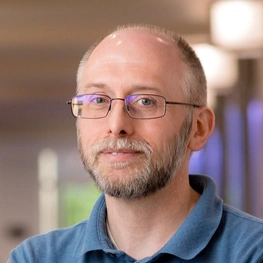
Principal Engineer, SEI Software Solutions Division
Improving Software Architecture
A common problem in DoW software is architectural decay. Over time, new components are added piecemeal, abstractions blur, and the original design intent disappears. Software architects lack effective automation to support much of their work. As Ivers described the problem, “Generative AI is not yet capable of full architectural reasoning, but the SEI has a rich history in software architecture that is directly applicable to the DoW’s modernization challenge.”
SEI research in 2025 investigated which architecture activities are most amenable to application of generative AI. While generative AI struggles with the contextual and judgment-based reasoning that software architecture requires, it can still help by recognizing patterns and proposing improvements. When paired with structured reasoning prompts, human oversight, and established software-engineering practices, this hybrid approach can transform architecture from a static artifact into a living model that evolves alongside the software. The SEI is working with government partners to integrate architecture approaches in generative AI workflows for software modernization more effectively.
A Smarter Path Forward
Generative AI is not a complete solution for modernization, but it is a catalyst. It can expose architectural flaws, suggest design improvements, and dramatically accelerate translation of legacy code into modern, sustainable systems. For the DoW, which manages some of the most complex and long-lived software systems in existence, this technology offers a bridge between legacy and innovation. The SEI is coupling AI’s generative power with disciplined engineering practices so that modernization can become not just faster, but smarter.
The SEI is seeking to collaborate with more organizations to translate legacy Ada code. Contact us if you would like to partner in further testing.
Read More
Efficacy of Human Teaming with Generative AI for Software Maintenance
An SEI study examined how early-stage developers use AI tools for complex code generation tasks.
Social Media Analysis Elucidates Army’s Battle Damage Assessment
SEI algorithms recommend social media posts from battlefields for analyst review, enhancing situational awareness.