
As a programming language, like Ada, grows less common, software written in that language becomes an obstacle preventing the U.S. Department of War (DoW) from realizing the benefits of modern, well-supported development ecosystems. Systems implemented in such programming languages are increasingly difficult to maintain and evolve, leading to significant bottlenecks. Modernization efforts that include a move to a more widely used programming language, like C++, can remove these bottlenecks. Unfortunately, code translation has historically been a slow, resource intensive task.
Researchers at the SEI are exploring how to improve code translation using artificial intelligence (AI). This effort implements context engineering strategies to improve the speed and accuracy of translation workflows that use AI. While AI can accelerate the pace of code translation, it can also produce many more avoidable errors than manual translation, particularly when used at scale. According to SEI testing, AIs inject on average 140 errors per thousand lines of code in baseline tests. The objective of this project is to create a workflow that allows teams to incrementally translate Ada code to C++ with significantly fewer AI-generated errors, which in turn allows teams to get the job done faster.
This effort implements context engineering strategies to improve the speed and accuracy of translation workflows that use AI.
Principal Engineer
AI can identify architectural flaws, suggest improvements, and dramatically accelerate translation of legacy code into modern, sustainable systems. Pilot studies conducted on two common types of cross-unit link errors, broken connections among software modules, showed an error reduction rate of 86 percent to 100 percent. By using AI more effectively to improve programming language translation workflows and modernize systems using dated programming languages, DoW organizations can reduce bottlenecks in integrating new technologies, adding additional capabilities, and reusing or rehosting software.
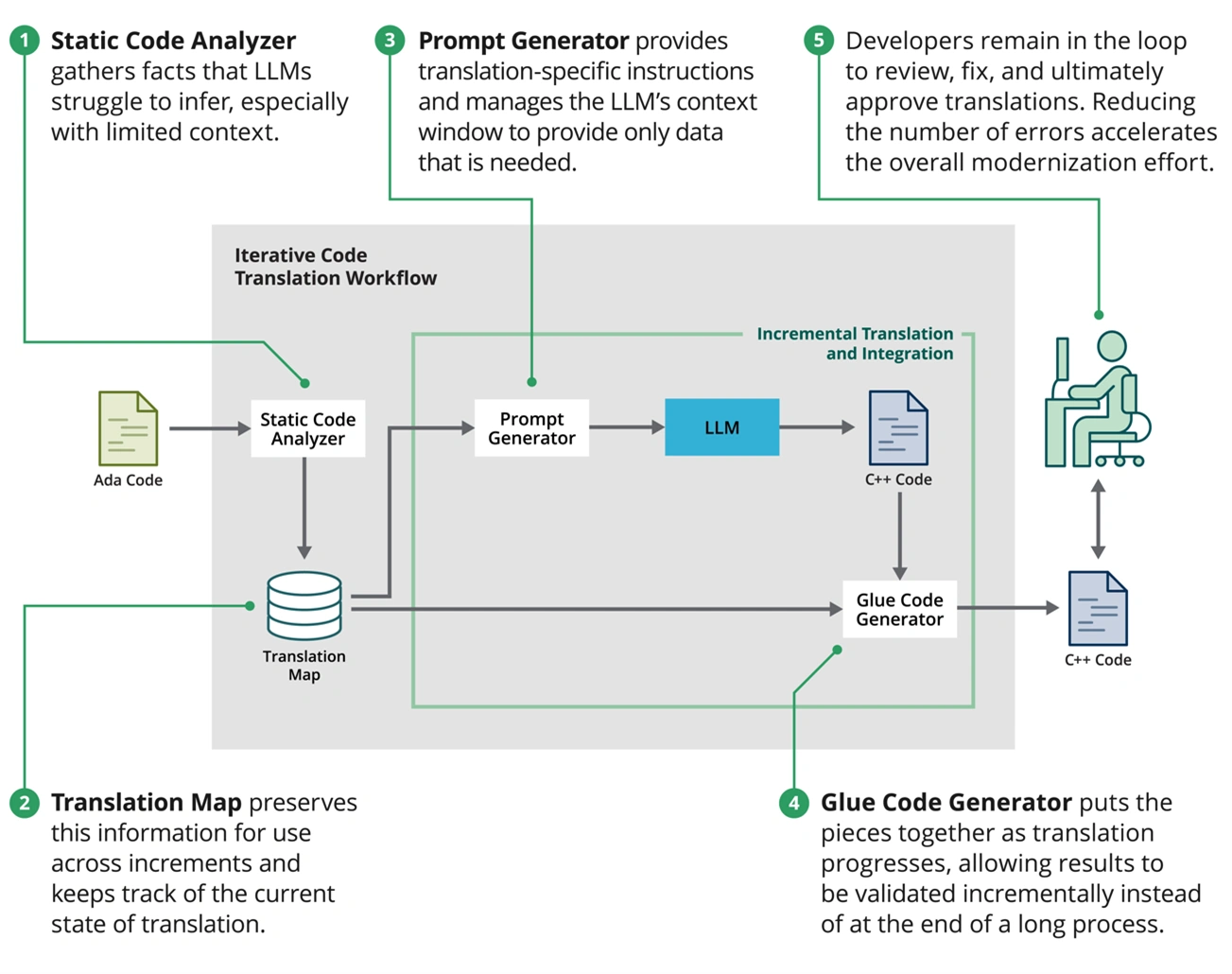
Figure 1: An Improved Code Translation Workflow
In Context
This FY2025-26 project
- creates context engineering strategies that mitigate the problems that arise from breaking a large, complex problem (translation of millions of lines of code) into thousands of smaller problems
- fills research gaps in the application of AI for translation of large projects and the effectiveness of AI on an unpopular programming language
- leverages SEI expertise and experience in AI, programing languages, code analysis, software architecture, and advanced automation
- meets the SEI’s primary enduring goals of improving affordability and aligns with the CMU SEI technical objective to modernize software engineering and acquisition by applying automation and AI to solve critical DoW problems
- aligns with the OUSD(R&E) critical technology priority of leveraging advanced computing and software
Learn More
- Read the 2025 Year in Review Article
- View the Presentation
Principal Investigator
James Ivers
Principal Engineer
SEI COLLABORATORS
Dr. Tapajit Dey
Software Architecture Researcher
Chris Seifried
Associate Engineer
Scott Sinclair
Software Engineer
Lihan Zhan
Associate Software Engineer
Mena Kostial
Associate Software Engineer
HAVE A QUESTION?
Reach out to us at info@sei.cmu.edu